

Athletics Foot and Ankle Injuries: Treatment, Rehabilitation and Track Footwear
27 July 2026
Running, sprinting and jumping place substantial demands on the foot and ankle. Track athletes must repeatedly absorb and produce high forces, often at speed and through a relatively small area of contact with the ground.
Foot and ankle pain may initially feel manageable, but continuing to train without addressing the cause can turn a minor irritation into a persistent tendon, ligament or bone problem.
At TA Physiotherapy, we assess and rehabilitate runners and track athletes across our clinics in Henley-on-Thames, Crouch End and Marylebone. Treatment focuses on identifying the injured structure, restoring physical capacity and preparing the athlete for the demands of training, spikes and competition.
Why Are Foot and Ankle Injuries Common in Athletics?
The foot and ankle provide both stability and propulsion during running.
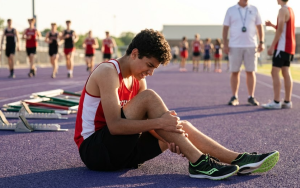
Each stride requires the lower limb to:
- Absorb impact
- Control pronation and foot position
- Stabilise the ankle
- Store and release elastic energy
- Generate force during push-off
- Adapt to speed, bends and track surfaces
The demands increase significantly during sprinting, jumping, hill running and high-intensity interval sessions. Faster running also tends to move loading towards the front of the foot and places greater demands on the calf, Achilles tendon and structures around the midfoot.
Training errors, limited strength and sudden changes in footwear can all reduce the body’s ability to manage these loads.
Common Foot and Ankle Injuries in Track Athletes
Lateral ankle sprains
An ankle sprain usually occurs when the foot rolls inwards, damaging ligaments on the outside of the ankle.
It may happen during:
- Sprint drills
- Jump landings
- Hurdles
- Running around bends
- Uneven warm-up areas
- Cross-training or field-based conditioning
Symptoms can include swelling, bruising, pain and instability.
Ankle sprains are often dismissed as minor injuries. However, research indicates that many athletes return to sport before strength, balance and function have fully recovered. The internationally developed PAASS framework recommends assessing pain, ankle impairments, athlete perception, sensorimotor control and sport-specific performance before return to sport. (British Journal of Sports Medicine)
The Achilles tendon connects the calf muscles to the heel and plays a major role in running and jumping.
Common symptoms include:
- Morning stiffness
- Pain above the heel
- Pain at the beginning of a running session
- Reduced calf strength
- A delayed increase in pain after training
Achilles pain commonly develops after a rapid increase in sprinting, hills, plyometrics or track volume.
Moving towards a more forefoot-dominant running action can reduce loads at the knee, but research has also demonstrated increased loading through the ankle plantar-flexor muscles and Achilles tendon. This is important when changing running technique or introducing spikes. (PubMed)
Midfoot pain and tendon overload
“Midfoot pain” is a description rather than a diagnosis.
Pain through the middle or inside of the foot may involve:
- Tibialis posterior tendon
- Peroneal tendons
- Extensor tendons
- Plantar fascia
- Midfoot joints
- Navicular or metatarsal bone stress
- Lisfranc joint complex
The exact location, onset and behaviour of pain matter. Persistent focal pain, swelling or pain when hopping may indicate a bone stress injury and should be assessed promptly.
A report involving highly competitive runners described five navicular bone stress injuries associated with carbon-plated footwear. This does not prove that plated shoes directly cause these injuries, but it highlights how changes in footwear may redistribute loads and create problems when introduced too quickly. (PubMed)
Plantar heel pain
Plantar heel pain is usually felt under the heel and can be particularly noticeable during the first steps in the morning or after periods of rest.
Best-practice guidance recommends individualised education, stretching and taping as core treatment, with additional interventions considered when recovery is slow. (British Journal of Sports Medicine)
Calf strains
The calf must absorb and produce considerable force during running. Sprinting and forefoot-dominant track work increase these demands further.
Calf strains may occur following:
- Sudden acceleration
- Maximum-speed running
- Plyometric training
- A rapid return to spikes
- Inadequate exposure to high-speed work
Rehabilitation should restore both straight-knee and bent-knee calf strength before progressing to repeated running and sprinting.
Do Track Spikes Help Midfoot Tendon Problems?
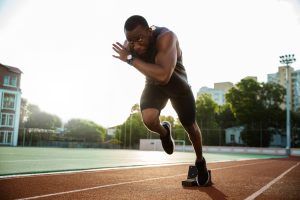
Track spikes are designed primarily to improve traction, reduce shoe weight and support performance. They are not designed to treat a painful tendon.
Modern spikes may include stiff plates and responsive foam. Research suggests these features can improve running economy or acceleration in some athletes, but the effect varies according to the athlete, event, speed and shoe construction. (PMC)
A 2024 study comparing advanced and traditional distance spikes found measurable differences in running biomechanics and plantar pressure between spike designs. This demonstrates that changing spikes can alter where and how force is applied through the foot. (PubMed)
Spikes are unlikely to “offload” a midfoot tendon
Compared with a cushioned training shoe, most spikes have:
- Less cushioning
- Greater forefoot stiffness
- A lower heel-to-toe drop
- More aggressive traction
- Greater demand at faster running speeds
Distance spikes may distribute force differently from conventional running shoes. Earlier research comparing training shoes, racing flats and distance spikes found differences in ground-reaction forces between footwear conditions, supporting the view that spikes change loading rather than simply making an athlete faster. (PMC)
For an irritated midfoot tendon, this may increase rather than reduce the demand placed on the foot.
A spike might feel temporarily better because it changes the athlete’s mechanics or provides a stiffer platform. That does not necessarily mean the injured tissue is being protected. Pain reduction in a particular shoe should not be used as the only measure of readiness.
When can spikes be reintroduced?
Spikes are usually best reintroduced after the athlete has rebuilt sufficient capacity in normal training footwear.
Before returning to spikes, the athlete should ideally tolerate:
- Pain-controlled walking
- Calf raises
- Single-leg balance
- Hopping
- Running drills
- Progressive track running
- Faster running in regular trainers
Spikes should then be introduced gradually.
A sensible progression might be:
- Strides in trainers
- Short accelerations in lightweight trainers
- A small number of controlled repetitions in spikes
- Increased spike volume over several sessions
- Faster and more event-specific work
- Full training and competition exposure
Advanced-footwear reviews recommend gradual integration so the musculoskeletal system has time to adapt to altered mechanics and stiffness. The long-term injury implications of these technologies are not yet fully understood. (PMC)
Choosing Footwear for Track Training
Athletes do not need to complete every track session in spikes.
Cushioned running shoes
These are generally suitable for:
- Warm-ups
- Cool-downs
- Easy running
- Longer aerobic repetitions
- Early rehabilitation sessions
- Athletes rebuilding foot capacity
Lightweight training or racing shoes
These can provide an intermediate step between cushioned shoes and spikes.
They may be useful for:
- Tempo running
- Faster intervals
- Running drills
- Controlled return-to-speed sessions
Track spikes
Spikes are most appropriate for:
- Maximum-speed work
- Race-specific sessions
- Sprint starts
- Jump or hurdle training
- Competition preparation
The correct spike also depends on the event. Sprint spikes tend to be more aggressive and rigid than middle-distance or distance spikes.
Comfort remains an important consideration when choosing running footwear. World Athletics advises athletes to understand their running style and select shoes that fit comfortably rather than relying solely on marketing or a particular shoe category. (World Athletics)
How Physiotherapy Helps Foot and Ankle Injuries
A physiotherapy assessment should determine which structure is injured and why its capacity has been exceeded.
Assessment may include:
- Foot and ankle movement
- Calf and foot strength
- Single-leg control
- Hop performance
- Running mechanics
- Training-load review
- Track-surface exposure
- Footwear and spike history
- Screening for bone stress injury
Treatment may include progressive strength work, movement retraining, symptom-guided load modification and a structured return to running.
Footwear can support this process, but it should not replace rehabilitation.
Returning to Track Training
Return to track should be based on function rather than simply waiting for a set number of weeks.
Depending on the injury, useful criteria may include:
- Minimal pain during daily activity
- No significant swelling
- Restored ankle movement
- Strong repeated calf raises
- Pain-controlled hopping
- Good single-leg balance
- Tolerance of running drills
- Completion of progressive speed sessions
- Confidence when using spikes
An athlete returning from a tendon injury may initially tolerate straight-line running but struggle with bends, sprint starts or repeated high-speed efforts. Rehabilitation should therefore progress towards the athlete’s actual event demands.
Foot and Ankle Physiotherapy at TA Physiotherapy
TA Physiotherapy supports recreational runners, competitive athletes and active adults experiencing foot and ankle pain.
Our rehabilitation may include:
- Detailed injury assessment
- Running and training-load analysis
- Foot and ankle strength testing
- Individualised exercise rehabilitation
- Footwear and spike guidance
- Return-to-running progression
- Return-to-track and competition planning
- Referral for imaging or specialist assessment when required
Appointments are available at:
Book a Foot and Ankle Injury Assessment
Track spikes can improve performance, but they are not a treatment for midfoot tendon pain. Introducing them before the foot has regained adequate strength and load tolerance may aggravate symptoms.
If you have persistent midfoot pain, ankle instability, Achilles symptoms or pain when running on the track, an early assessment can help establish the correct diagnosis and prevent the problem from worsening.
Book a foot and ankle injury assessment with TA Physiotherapy and receive a structured plan for returning to running, track sessions and competition.
References
- Smith MD, et al. Return to sport decisions after an acute lateral ankle sprain: introducing the PAASS framework. British Journal of Sports Medicine. 2021.
- Geisler C, et al. A biomechanical comparison of track spikes with advanced footwear technology and a traditional spike. 2024.
- Healey L, et al. Can we quantify the benefits of super spikes in track running? 2022.
- Willwacher S, et al. Does advanced footwear technology improve track running performance? 2024.
- Tenforde AS, et al. Bone stress injuries in runners using carbon-fibre plate footwear. 2023.
- Logan S, et al. Ground reaction force differences between running shoes, racing flats and distance spikes. 2010.
- Kulmala JP, et al. Forefoot strikers exhibit lower running-induced knee loading but increased ankle plantar-flexor and Achilles loading. 2013.
- Morrissey D, et al. Management of plantar heel pain: a best-practice guide. British Journal of Sports Medicine. 2021.